



Research Institute of Biology
The Research Institute of Biology is a leading scientific institution in Central and Southeast Ukraine. It provides complex scientific research and training in different fields of modern Biology, Ecology, and Nature Conservation.
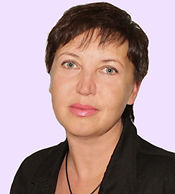 |
Director: Iryna Anatoliivna Ivanko Candidate of Biological Sciences, Senior Researcher Tel.: +380975089000 ORCID: 0000-0001-6542-1015 E-mail: ivanko_ndi_biol_dnu@i.ua, ivankoirina45@gmail.com |
The history of the Institute dates back to 1927, when the Dnipropetrovsk State Hydrobiological Station was established in connection with the construction of the Dnipro Hydroelectric Power Station, the largest facility of its kind in Europe at the time. In 1934, the station was reorganized into the Dnipropetrovsk Research Institute of Hydrobiology at the university, which subsequently became a major centre for hydrobiological research in central and southern Ukraine. In 1974, following the expansion of its research areas, the Research Institute of Hydrobiology was renamed the Research Institute of Biology.
The founder and first director of the Institute was D. O. Svirenko, Corresponding Member of the Academy of Sciences of the Ukrainian SSR, Doctor of Biological Sciences and Professor, who headed the Institute from 1934 to 1941. He was succeeded by P. O. Zhuravel, Doctor of Biological Sciences and Professor (1947–1967); I. P. Lubianov, Doctor of Biological Sciences and Professor (1967–1974); O. M. Vinnychenko, Doctor of Biological Sciences and Professor (1974–2001); and A.F. Kulik, Candidate of Biological Sciences and Senior Researcher (2001–2015). The Institute is currently headed by I. A. Ivanko, Candidate of Biological Sciences and Senior Researcher.
The development of the Institute’s research areas involved prominent scientists, including H. B. Melnykov, Doctor of Biological Sciences and Professor, Rector of Dnipropetrovsk University from 1951 to 1964; P.P. Shirshov, Academician of the Academy of Sciences of the USSR; M. F. Yaroshenko, Academician of the Academy of Sciences of the Moldavian SSR; S. P. Fedii, Professor; O. D. Reva, Doctor of Biological Sciences and Professor; V. O. Berezin, Doctor of Biological Sciences and Professor; Yu. S. Babenko, Doctor of Biological Sciences and Professor; A.P. Travlieiev, Corresponding Member of the National Academy of Sciences of Ukraine, Doctor of Biological Sciences and Professor; V. L. Bulakhov, Professor; L. H. Dolhova, Doctor of Biological Sciences and Professor; A. I. Vinnikov, Doctor of Biological Sciences and Professor; and many others.
Over the years, the Institute, in cooperation with researchers from the Faculty of Biology and Ecology, has achieved significant results in biology, advanced biotechnology, ecology and environmental protection, as well as in the diagnosis and treatment of common diseases. Achievements of European-level significance include the development of forecasts for the formation of ecosystems in large reservoirs across the former Soviet Union and Europe; the establishment and practical implementation of forest reclamation systems for disturbed lands; and the creation of the O. L. Belgard Prisamarskyi Educational and Research Biogeocenological Station, which is included in the network of research stations of the National Academy of Sciences of Ukraine and the United Nations Environment Programme (UNEP) and/or UNESCO.
International recognition was gained for a method developed to produce complex enzyme preparations of streptomycete origin. This development resulted in four international patents granted in the United States, Canada, France and the United Kingdom. Binary preparations of biological insecticides and biostimulants were developed for the first time and successfully introduced into agricultural practice.
The Institute also initiated a modern concept involving the use of neurospecific proteins in the diagnosis of disorders of the central nervous system. Criteria for selecting cereal crops based on economically valuable characteristics were proposed. Promising antagonist strains of phytopathogenic bacteria and fungi were obtained for incorporation into highly active microbial consortia designed to stimulate plant growth and protect plants against diseases and pests.
To improve the effectiveness of bioinsecticides, highly active producer strains were selected, and pilot-scale batches of the resulting preparations were produced and tested under natural conditions. Novel approaches to the early diagnosis of damage to the pancreas, gastrointestinal tract and liver under conditions of toxic injury and chronic disease development were developed and implemented in clinical institutions. Practical recommendations were also developed concerning the use of hydrated fullerene C₆₀ as a neuroprotective agent in conditions of hyperglycaemia, including diabetic retinopathy.
Diagnostic microsystems based on neurospecific markers were developed to assess the risk of neurological complications and cognitive impairment in cases of polytrauma and common chronic diseases. The cardioprotective and neuroprotective properties of natural antioxidants suitable for use in functional foods were also identified.
The Institute actively develops current research areas concerned with assessing the present state and anthropogenic and climate-driven transformation of natural, semi-natural and artificial ecosystems; biodiversity; rare and threatened plant and animal species; the invasive activity of alien species; and the development of urban green infrastructure.
New data have been obtained on the status of globally vulnerable, rare and endangered plant and animal species in the Steppe Zone of Ukraine. A classification of globally rare species according to their response patterns to adverse environmental factors was developed, and conservation strategies were formulated in the form of action plans.
An innovative project for Ukraine and European regions – the Cadastre of Alien Species of the Flora and Fauna of the Steppe Zone – was developed. An integrated scale for alien plant and animal species was also created based on their harmfulness and usefulness.
The scientific and methodological recommendations developed for the establishment and maintenance of green spaces served as the basis for the Green Programme and the Rules for the Management of Green Spaces in the City of Dnipro, adopted by a decision of the Dnipro City Council on 25 September 2019.
The results of research into alien and invasive dendroflora in the Steppe Zone of Ukraine were used in compiling the List of Invasive Tree Species with a Significant Capacity for Uncontrolled Spread Prohibited for Use in Forest Regeneration, approved by Order No. 184 of the Ministry of Environmental Protection and Natural Resources of Ukraine dated 3 April 2023.
Researchers from the Institute participate in the work of the working group preparing proposals for reforming the national environmental monitoring system in Ukraine in the area of biodiversity, established by Order No. 527 of the Ministry of Environmental Protection and Natural Resources of Ukraine dated 24 July 2023.
The Institute’s extensive experience in studying natural and artificial biogeocenoses of the Steppe Zone of Ukraine is used by its specialists in expert biological and environmental assessments of forest-fund areas located on forestry-designated land. This work is carried out as part of the working group responsible for measures to conserve and restore forests in Dnipropetrovsk Region, established pursuant to Order No. R-332/0/3-24 of the Head of the Dnipropetrovsk Regional State Administration dated 7 August 2024.
The Research Institute of Biology actively develops research in nature conservation and continuously contributes to the establishment of protected areas and the development of Ukraine’s ecological network. More than 70 scientific justifications for the establishment of protected areas have been prepared, including those for the Dnipro-Oril Nature Reserve; the Samarskyi Bir and Oril national parks; the Samarski Plavni and Balka Kobylna regional landscape parks; and numerous nature reserves in Dnipropetrovsk, Donetsk and Mykolaiv regions.
In fruitful cooperation with the NGO All-Ukrainian Environmental League, the Institute prepared the Scientific Justification for the Proposed Establishment of the Livoberezhnyi Local Landscape Nature Reserve in the City of Dnipro. This initiative resulted in the first conversion of a community-established
nature reserve into a state-designated protected area. The reserve was approved by Decision No. 656-25/VII of the Dnipropetrovsk Regional Council dated 9 October 2020.
Researchers from the Institute are authors and co-authors of Ukraine’s first regional Red Data Book, The Red Data Book of Dnipropetrovsk Region: Fauna, and its second volume, The Red Data Book of Dnipropetrovsk Region: Flora, as well as the official Red List of Rare Plants of Dnipropetrovsk Region. They have also contributed to numerous monographs and articles assessing the condition of protected areas and biodiversity as a whole.
Institute specialists participated in preparing the Green Book of Ukraine and the monograph Ruderal Vegetation of Ukraine, both of which have national and international significance.
The Institute develops and implements biological and environmental justifications for projects aimed at restoring and improving the hydrological regime and ecological condition of water bodies in the Forest-Steppe and Steppe zones of Ukraine. These activities include two international projects related to the development of the Kherson-Gdańsk inland waterway.
The biological justifications and sustainable-use regimes developed for aquatic biological resources in various types of water bodies – including reservoirs, rivers, ponds, and cooling reservoirs of thermal and nuclear power plants – provide for both a substantial reduction in the biomass of aquatic organisms that obstruct the operation of energy facilities and impair water quality in the Dnipro River basin, and an increase in fish production.
The Research Institute of Biology provides research services to external organizations, legal entities and individuals across all of its research areas. Its partners and clients have included the Department of Ecology and Natural Resources of the Regional State Administration; PJSC Kryvbaszalizrudkom; the state-owned enterprise National Nuclear Energy Generating Company “Energoatom”; DTEK Prydniprovska Thermal Power Plant; the state institution Dniprohydroproekt; the NGO Dnipro Environmental Council; the Dnipropetrovsk Regional Organization of the Ukrainian Society of Hunters and Fishermen; farms; individual entrepreneurs; and many other organizations and individuals.
The Institute’s research is integrated into the European Research Area. Its researchers participate in joint scientific projects with Lund University in Lund, Sweden; Vilnius University in the Republic of Lithuania; the Jan Kiełanowski Institute of Animal Physiology and Nutrition in Jabłonna, Poland; Bingöl University in Bingöl, Türkiye; and other institutions.
The Research Institute of Biology maintains close links between its research activities and the educational process at the Faculty of Biology and Ecology. This is achieved by involving academic and teaching staff, postgraduate students and undergraduate students in the Institute’s research projects; encouraging Institute researchers to participate in teaching; using research findings in the training of highly qualified specialists and researchers; and integrating research results into the educational process.
The Research Institute of Biology currently comprises 7 research laboratories, where contemporary research is conducted in the respective fields:
1. Research Laboratory of Terrestrial Ecology, Forest Soil Science and Land Reclamation
2. Research Laboratory of Biomonitoring
3. Research Laboratory of Physiology and Molecular Biology of Plants
4. Research Laboratory of Hydrobiology, Ichthyology and Radiobiology
5. Research Laboratory of Molecular Biology of Microorganisms and Microbial Biotechnology
6. Research Laboratory of Biochemistry2. Research Laboratory of Biomonitoring
3. Research Laboratory of Physiology and Molecular Biology of Plants
4. Research Laboratory of Hydrobiology, Ichthyology and Radiobiology
5. Research Laboratory of Molecular Biology of Microorganisms and Microbial Biotechnology
7. Research Laboratory of Photosynthesis
Heads of Research Laboratories
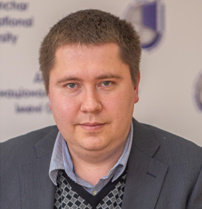 |
Dr. Oleh MARENKOV Head of Research Laboratory Hydrobiology, Ichthyology and Radiobiology ORCID: 0000-0002-3456-2496 E-mail: gidrobions@gmail.com |
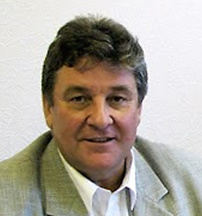 |
Prof. Olexandr PAKHOMOV Head of Research Laboratory Laboratory of Biomonitoring ORCID: 0000-0002-5192-6140 E-mail: a.pakhomov@i.ua |
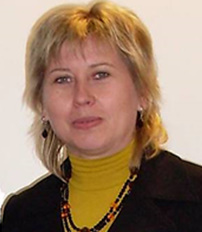 |
Prof. Halyna USHAKOVA Head of Research Laboratory of Biochemistry ORCID: 0000-0002-5633-2739 E-mail: ushakova_g@ukr.net |
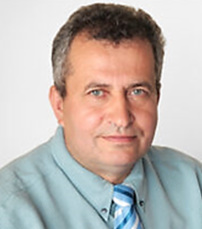 |
Prof. Yuriy LYKHOLAT Head of Research Laboratory Physiology and Molecular Biology of Plants ORCID: 0000-0003-3354-8251 E-mail: lykholat2006@ukr.net |
 |
Dr. Tetyana SKLYAR Head of Research Laboratory Molecular Biology of Microorganisms and Microbial Biotechnology ORCID: 0000-0003-0224-2460 E-mail: microviro@ukr.net |
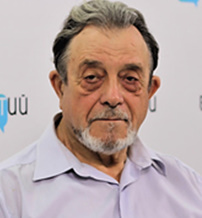 |
Dr. Borys BARANOVSKYI Head of Research Laboratory of Terrestrial Ecology, Forest Soil Science and Land Reclamation ORCID: 0000-0003-0732-7447 E-mail: boris.baranovski@ukr.net |
The Institute’s staff numbers more than 20 qualified employees including Doctors of Science and PhDs. Research and service laboratories are equipped with modern scientific tools.
The Research Institute of Biology is integrated into the educational process of the University and involves students in doing research at a modern scientific level.