



Research Institute of Chemistry and Geology
The Research Institute of Chemistry and Geology of DNU (until 2019, the Research Institute of Geology) is one of the oldest scientific geological institutions in Ukraine. It was established on the basis of the Department of Geology, founded in 1922 at the Dnepropetrovsk Mining Institute. From 1930 to 1933, the Institute was a branch of the Ukrainian Research Institute of the People's Commissariat of Education of the Ukrainian SSR. In 1933, it was transferred to Dnipropetrovsk State University.

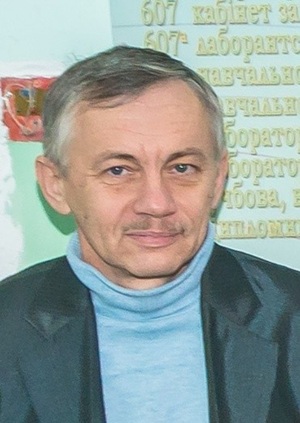
The Laboratory of Theoretical and Applied Problems of Chemistry
The Laboratory currently conducts fundamental and applied research in the following areas:
(a) Functionalized and fused azoles as potential antibacterial agents: design, synthesis, and prospects for applications in medicine and technology;
(b) Design of biologically relevant N,O,S-containing heterocycles involving new catalytic systems;
(c) A new component base for high-energy systems: synthesis, modeling of energy-intensive compositions, and investigation of their transformation processes.
The main results of the Research Institute's activities include the development of methods for the synthesis of a range of new heterocyclic systems and promising biologically active substances based on in silico, in vitro, and in vivo studies, as well as the development of new analytical methods for pharmaceuticals, food products, and other materials. Over the past 10–15 years, the Research Institute's staff have published more than 100 papers in well-known international journals, including Nature Chemistry, Nature Communications, Coordination Chemistry Reviews, Journal of Organometallic Chemistry, Angewandte Chemie International Edition, ACS Catalysis, Analytical Chemistry, Environmental Science & Technology, Tetrahedron Letters, Talanta, Environmental Science: Processes & Impacts, Medicinal Chemistry Research, European Journal of Medicinal Chemistry, European Journal of Organic Chemistry, Journal of Heterocyclic Chemistry, Synthetic Communications, Journal of Molecular Structure, New Journal of Chemistry, RSC Advances, Microchemical Journal, Journal of Molecular Modeling, Journal of Physical Chemistry A, International Journal of Environmental Analytical Chemistry,Chemosphere, among others. These journals are indexed in the Scopus and Web of Science. The Institute's researchers have also received more than 20 Ukrainian patents for inventions and utility models. They have completed research internships and conducted collaborative research in the United States, Japan, Slovakia, Germany, Turkey, Latvia, Ireland, and other countries.
Our research group offers custom organic synthesis and medicinal chemistry support for drug discovery programs, with a particular focus on the preparation of structurally diverse drug-like small molecules and advanced synthetic intermediates. We can work with academic and industrial partners on individual compounds as well as on small focused libraries designed for biological screening and structure–activity relationship (SAR) studies. Our capabilities include the design and synthesis of novel molecular scaffolds, optimization of synthetic routes, preparation of target compounds based on structures or literature precedents, and development of practical synthetic procedures for previously unreported or difficult-to-access molecules. We are particularly interested in projects involving heterocyclic compounds, functionalized aromatic systems, sulfur- and nitrogen-containing molecules, bioactive small molecules, and covalent or non-covalent pharmacophore design. We can also undertake the synthesis of analogues required for SAR optimization, including systematic modification of substituents, functional groups, linker units, and heterocyclic cores.
Depending on the project requirements, our team can provide multi-step organic synthesis, reaction optimization, purification, and comprehensive structural characterization of the obtained compounds. The available analytical infrastructure enables characterization by spectroscopic and physicochemical methods, while computational tools can additionally be used for in silico ADMET assessment, molecular-property prediction, and structure-based molecular design. This combination of synthetic chemistry and computational analysis allows us to support projects from the initial molecular design stage through to the preparation and characterization of compounds suitable for subsequent biological evaluation.
We are open to contract research and collaborative projects. Our goal is to provide partners with a flexible and scientifically rigorous platform for the rapid design, synthesis, and characterization of novel small molecules for drug discovery and medicinal chemistry programs.
The Laboratoryof Geology, Hydrogeology and Geoinformatics
According to the results of a set of multidirectional studies, the laboratory identified the main mineralogical and geochemical features of ores of gold deposits of the Middle Dnieper and patterns of localization of molybdenum and tungsten ore deposits of the Ukrainian Shield; developed geographic information systems (GIS) of cartographic mapping of man-caused areas, environmental measures of hydrogeological direction for these areas using GIS and the model of distribution of harmful substances in the air. The technology of hydrogeological monitoring of the local level of mining regions of Ukraine is offered; made processing of hydrogeological data and schematization of hydrogeological conditions; mathematical models were built, which were used to solve predicted hydrogeological problems. For the first time, a hydrodynamic and hydrogeochemical substantiation of the structure of a regime observation network based on solving equations describing filtration and mass transfer processes has been proposed. The developments of the scientists of the laboratory have a purely practical orientation, made for real objects and solve current environmental problems. The results of research should be used as a scientific justification for a set of environmental measures of hydrogeological direction. First of all, it is protection against depletion and pollution of water and land resources.
Since 2015, on the basis of the Research Institute of Chemistry and Geology, economic contractual topics have been carried out with Ukrchormetgeologiya to determine the chemical composition of groundwater and surface water in the territories of the Northern mining and processing plant, Ingulets mining and processing plant and Svistunov Beams. The content of major ions and microcomponents was determined. In the process of implementation of economic contract topics, the Customer was provided with consultations on the processing of the obtained results (maps, reports). Over the past 5 years, 9 articles have been published in international journals as the Journal of Geology, Geography and Geoecology, included in the scientometric database of Web of Science.
Engineering Geology Research Group
Since 2015, the research group of engineering geology (head - Doctor of Geological Sciences, Assoc. Prof. Tetiana Mokrytska) continues the research conducted since the 1940s at the Research Institute of Geology under the leadership of Prof. I.A. Skaballanovich. Studies of the patterns of development of engineering and geological processes, features of the structure and properties of soils, changes in the conditions of technogenesis are performed in the framework of projects that have received state support and funding. Project topics: degradation of subsidence properties of forest soils and forecasting of geodynamic hazards of urban areas. In 2021, the chapter was published in a collective monograph: Tatyana P. Mokritskaya, Anatolii V. Tushev, Chapter 17 - On fractal based estimates of soil subsidy, Editor (s): Pijush Samui, Barnali Dixon, Dieu Tien Bui. Basics of Computational Geophysics, Elsevier, 2021,
https://www.sciencedirect.com/science/article/pii/B9780128205136000138Scientific work is ongoing to study the properties and microstructure of dispersed soils as natural fractals. Over the past 5 years, the research staff have published 12 articles in well-known international journals as Contemporary Engineering Sciences, Journal of Geology, Geography and Geoecology, Bulletin of Engineering Geology and the Environment, Naukovyi Visnyk NHU, included in Scopus scientometric databases or Web of Science.
The Laboratory of Stratigraphy and Paleontology
The laboratory is conducting study of stratigraphic structure and correlations of Cenozoic rocks, reconstruction of the history of the region in the past geological time, built a stratigraphic basis for large-scale mapping within the State Program of geological study of areas together with the geologists of UkrDGRI. The “Atlas of the main lithotypes of the late Precambrian and the Phanerozoic of Ukraine” was created and the collection of the main stratons of the Phanerozoic of Ukraine for the State Library was formed. In 2017, launched a new area of research at the Research Institute. It is the monitoring of geological heritage aimed to study, assess, create a database and preserve geological monuments of Ukraine and include the best of them in the European Register of Geosites within the international GEOSITES programs.
In order to promote the activities of the Ukrainian Working Group ProGEO (European Association for the Preservation of Geological Heritage) created a Facebook page: "Ukrainian group of Progeo" Ukrainian group is part of Central Europe (ProGEO Working Group No. 2 - Central Europe), which is constantly updated. The updated list of geological monuments of nature of Ukraine "The Ukrainian List of Representative Geosites Ukraine for Europe-wide geosites list" within the framework of participation in the International project "Geosites" is presented for the first time. (https://www.facebook.com/ukraine.group.progeo) As part of the project, a list of geological heritage sites in the Dnipropetrovsk region has been created and updated, supplemented by photographs (more than 600) and videos. Within the framework of the same project, for the first time in the history of Oles Honchar Dnipro National University, a student internship was conducted in the Polish Carpathians
https://www.facebook.com/volodymyr.manyuk/videos/1331942053505853